Planning a trip to Indonesia? Understanding the latest Indonesia travel requirements is one of the most important steps before booking your flight. Whether you’re dreaming of relaxing on the beaches of Bali, trekking with wild orangutans in Sumatra, hiking volcanoes in Java, diving in Raja Ampat, or exploring Komodo National Park, preparing in advance will make your journey smoother, safer, and more enjoyable.
Indonesia is the world’s largest archipelago, with more than 17,000 islands stretching across Southeast Asia. Every year, millions of international visitors choose Indonesia for its stunning natural beauty, rich cultural heritage, incredible biodiversity, and warm hospitality. Before you travel, however, it’s essential to understand the entry requirements, visa options, passport validity rules, customs procedures, health recommendations, and other important travel information.
This comprehensive guide explains everything international travelers should know before visiting Indonesia. Since travel regulations may change over time, always verify the latest official requirements with Indonesian government authorities or your local Indonesian embassy before departure.
Preparing for an international trip involves much more than booking flights and hotels. Missing an important travel requirement could result in delays, denied boarding, or problems upon arrival.
Knowing the latest Indonesia travel requirements allows you to:
Whether you are visiting Indonesia for a short holiday, business trip, honeymoon, family vacation, or adventure tour, proper preparation helps ensure a stress-free experience.
Your passport is the most important travel document you need before visiting Indonesia.
In general, international visitors should ensure that their passport:
If your passport expires soon, renew it before booking your flight. Airlines may refuse boarding if your passport does not meet entry requirements.
It’s also a good idea to keep digital copies of your passport, visa, travel insurance, and flight tickets stored securely online or on your phone in case of emergencies.
One of the most frequently asked questions is:
Do I need a visa to visit Indonesia?
The answer depends on several factors, including:
Indonesia offers several visa options for international travelers.
These commonly include:
Before traveling, check the latest visa policy that applies to your passport.
Many international tourists are eligible for a Visa on Arrival (VOA).
This visa is designed for travelers visiting Indonesia for tourism, family visits, or certain short-term purposes.
Depending on the applicable regulations, a Visa on Arrival generally allows visitors to stay for a limited period and may be extendable under certain conditions.
To obtain a VOA, travelers are usually required to present:
Requirements and eligible countries may change, so always confirm the latest information before your trip.
Indonesia also provides electronic visa services for eligible travelers.
Applying online before departure can help reduce waiting times after arrival.
The application process generally includes:
Travelers should print or save their approved visa for presentation during their journey.
Indonesia may allow visa-free entry for citizens of selected countries.
The duration of stay and permitted travel purposes depend on the applicable immigration regulations.
If you qualify for visa-free entry, make sure your passport still meets Indonesia’s passport validity requirements.
Immigration officers or airlines may ask visitors to provide proof that they intend to leave Indonesia before their permitted stay expires.
Examples include:
Booking flexible airline tickets can provide additional convenience if your travel schedule changes.
International travelers arriving in Indonesia are generally required to complete a customs declaration.
Depending on the arrival airport and current procedures, this may be completed electronically before arrival or during the immigration process.
Travelers should accurately declare items such as:
Providing accurate information helps ensure a smooth customs process.
Indonesia does not have the same health conditions throughout the country.
Mountain destinations, tropical islands, rainforests, and large cities each present different travel environments.
Before your trip, consider:
If you have pre-existing medical conditions, consult your doctor before traveling.
Depending on your travel history, itinerary, and personal health, healthcare providers may recommend routine or destination-specific vaccinations before visiting Indonesia.
Medical advice varies by traveler and destination, so speak with a qualified healthcare professional several weeks before departure.
If you plan to visit remote rainforests, rural villages, or national parks, additional health precautions may be recommended based on your itinerary.
Although travel insurance is not always mandatory, it is strongly recommended.
A comprehensive travel insurance policy can provide coverage for:
Adventure travelers planning activities such as scuba diving, volcano hiking, jungle trekking, or surfing should ensure these activities are covered under their insurance policy.
Indonesia uses the Indonesian Rupiah (IDR).
While major cities and tourist destinations widely accept credit and debit cards, cash remains important in smaller towns, traditional markets, and remote islands.
Before traveling:
Digital payment methods continue to expand, but cash is still useful in many parts of Indonesia.
Staying connected while traveling in Indonesia is easier than ever. Major cities and popular tourist destinations such as Bali, Jakarta, Yogyakarta, Lombok, Labuan Bajo, Lake Toba, and Bukit Lawang offer reliable mobile coverage and internet access.
International travelers can purchase a local prepaid SIM card at international airports, official mobile network stores, or authorized retailers. Several mobile operators provide affordable data packages suitable for tourists.
Before buying a SIM card, make sure:
Many hotels, restaurants, cafés, and airports also provide free Wi-Fi, although mobile data is often faster and more reliable for navigation and communication.
Indonesia is a vast archipelago consisting of thousands of islands, so transportation varies depending on your destination.
Flying is the fastest way to travel between islands. Indonesia has numerous domestic airports connecting major tourist destinations, including:
Booking flights in advance usually offers better prices, especially during holiday seasons.
Java has one of Southeast Asia’s most comfortable railway networks. Traveling by train is an excellent way to explore cities such as Jakarta, Bandung, Yogyakarta, Solo, and Surabaya while enjoying scenic landscapes.
Passenger ferries connect many Indonesian islands and are an affordable option for travelers with flexible schedules. Ferry services are commonly used between:
Weather conditions may occasionally affect ferry schedules.
In larger cities, ride-hailing services provide convenient transportation.
Visitors commonly use these services for:
These apps are often more affordable than traditional taxis.
Renting a private vehicle with a local driver is one of the most comfortable ways to explore Indonesia, particularly in destinations like Bali, Sumatra, Flores, and Java.
For visitors planning multiple stops each day, hiring a local driver can save time while providing valuable local knowledge.
Indonesia offers accommodation for every budget.
Options include:
Booking accommodation in advance is recommended during peak travel seasons, especially in Bali, Komodo, Raja Ampat, and popular national parks.
Indonesia is considered one of Southeast Asia’s best-value travel destinations.
Your daily budget depends on your travel style.
Budget travelers typically spend less by choosing hostels, local restaurants, and public transportation.
Mid-range travelers enjoy comfortable hotels, guided tours, and domestic flights at reasonable prices.
Luxury travelers can experience world-class resorts, private tours, fine dining, and yacht cruises.
Regardless of your budget, Indonesia offers excellent value compared with many other international destinations.
Packing wisely will make your trip more comfortable.
Essential travel items include:
Travelers visiting rainforests or volcanoes should also pack hiking shoes, quick-drying clothes, and waterproof gear.
Indonesia has a tropical climate with warm temperatures throughout the year.
Generally, two seasons are recognized:
Usually from May to September.
Ideal for:
Generally from October to April.
Although rainfall is more frequent, many destinations remain beautiful and less crowded.
Rain showers are often short, followed by sunshine.
The best time depends on your destination and preferred activities.
Dry season offers excellent beach conditions.
Wildlife viewing and jungle trekking are generally easier during drier months.
Ideal for island hopping, hiking, and seeing Komodo dragons.
Excellent diving conditions occur during much of the year, although seasonal weather varies.
Perfect for volcano hiking, cultural sightseeing, and exploring UNESCO World Heritage Sites.
Indonesia is generally considered a welcoming destination for international visitors.
Following simple precautions helps ensure a safe journey.
Travel tips include:
Solo travelers, couples, and families visit Indonesia every year and enjoy memorable experiences across the country.
Indonesia is culturally diverse, with hundreds of ethnic groups and traditions.
Visitors are encouraged to:
Being respectful creates meaningful cultural experiences and helps preserve Indonesia’s traditions.
Responsible travel benefits both visitors and local communities.
Travelers can help by:
Sustainable tourism helps protect Indonesia’s extraordinary biodiversity for future generations.
Before traveling, save important contact numbers, including:
Keeping these details easily accessible provides additional peace of mind throughout your trip.
Indonesia is much larger than many first-time visitors expect.
Rather than trying to visit too many destinations in one trip, consider focusing on one or two regions.
Popular itineraries include:
Planning enough time for each destination allows you to enjoy Indonesia without feeling rushed.
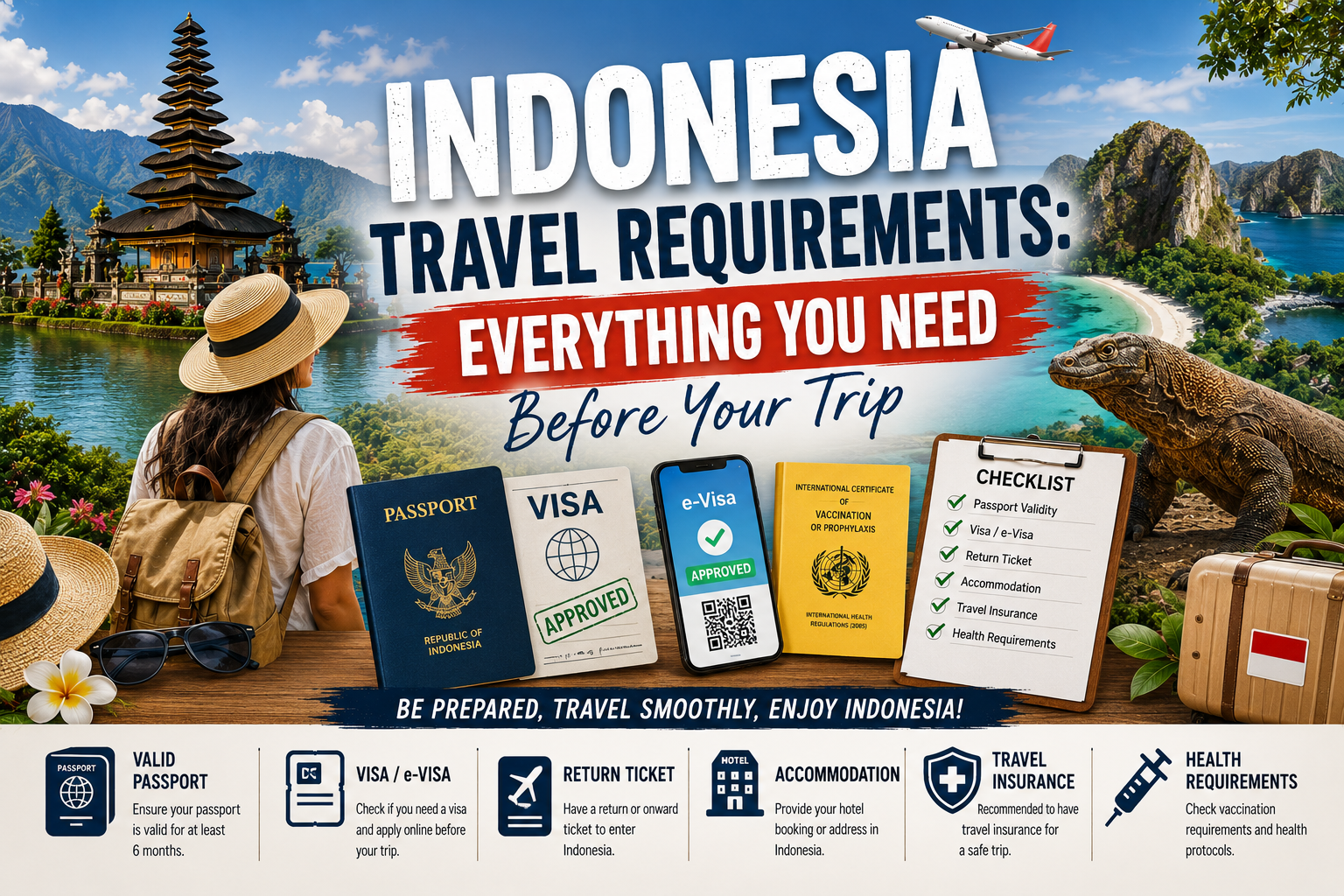
Indonesia is a welcoming destination for millions of international visitors each year, but travelers should always respect local laws, customs, and traditions. Understanding basic regulations before your trip will help you enjoy a safe and respectful travel experience.
Here are a few important guidelines:
By respecting local communities and the environment, you contribute to sustainable tourism and help preserve Indonesia’s unique cultural and natural heritage.
Indonesia has customs rules that visitors should be aware of before entering the country.
Travelers should always declare items when required, including:
Some items may be prohibited or restricted, so always check the latest official customs guidance before traveling.
Avoid carrying prohibited items in your luggage to ensure a smooth arrival process.
Indonesia generally uses:
Most hotels use Type C and Type F electrical outlets.
International visitors should bring a universal travel adapter if their devices use different plug types.
A portable power bank is also highly recommended, especially for long travel days, hiking trips, or island-hopping adventures.
The official language is Bahasa Indonesia.
However, English is widely spoken in many tourist destinations, including:
Learning a few basic Indonesian phrases can make your trip even more enjoyable.
Useful phrases include:
Local people usually appreciate visitors who make an effort to speak a little Indonesian.
Indonesia has become increasingly digital.
Many businesses now accept:
However, cash is still essential in:
Keeping both cash and cards available provides the greatest flexibility.
Indonesia is home to some of the world’s rarest wildlife.
When visiting national parks and wildlife reserves:
Ethical wildlife tourism helps protect Indonesia’s biodiversity for future generations.
Visa requirements depend on your nationality, travel purpose, and length of stay. Always check the latest immigration rules before departure.
Most international travelers should have a passport valid for at least six months beyond their arrival date.
Travel insurance may not always be mandatory, but it is strongly recommended for medical emergencies, trip cancellations, and adventure activities.
Indonesia uses the Indonesian Rupiah (IDR).
Yes, credit cards are widely accepted in major tourist destinations, hotels, and shopping centers, although cash remains useful in many areas.
Indonesia is generally considered safe for international travelers who take normal travel precautions and respect local customs.
The dry season, generally from May to September, is popular for outdoor activities, although Indonesia offers attractive destinations throughout the year.
It is generally recommended to drink bottled or properly filtered water during your stay.
Lightweight, breathable clothing is ideal due to Indonesia’s tropical climate. When visiting religious sites, dress modestly and cover your shoulders and knees if required.
English is commonly spoken in major tourist destinations, though learning a few Indonesian phrases is always appreciated.
Before leaving home, make sure you have:
Preparing these essentials before departure can save time and reduce stress once you arrive.
Indonesia offers far more than beautiful beaches. It is one of the most diverse travel destinations on Earth, combining spectacular landscapes, vibrant cultures, world-class diving, ancient temples, tropical rainforests, active volcanoes, extraordinary wildlife, and warm hospitality.
Whether you’re planning to:
Indonesia promises unforgettable experiences for every type of traveler.
Understanding the latest Indonesia travel requirements is the first step toward a smooth and memorable journey. Preparing your passport, checking visa requirements, arranging travel insurance, planning transportation, packing wisely, and respecting local customs will help ensure a hassle-free trip from arrival to departure.
From the lush rainforests of Sumatra and the volcanic landscapes of Java to the pristine beaches of Bali, the coral reefs of Raja Ampat, and the unique wildlife of Komodo National Park, Indonesia offers endless opportunities for adventure, relaxation, and cultural discovery.
Start planning early, stay informed with the latest official travel information, and explore Indonesia responsibly. With the right preparation, you’ll be ready to experience one of the world’s most extraordinary destinations and create memories that will last a lifetime.
Safe travels, and welcome to Indonesia!
International travelers need a valid passport, appropriate visa (if required), return or onward ticket, and must follow Indonesia’s immigration and customs regulations before entering the country.
Most travelers need a passport that is valid for at least six months from the date of arrival in Indonesia.
Visa requirements depend on your nationality, purpose of travel, and length of stay. Many tourists can apply for an electronic visa or Visa on Arrival.
The Visa on Arrival allows eligible foreign visitors to enter Indonesia for tourism and certain other purposes for a limited stay period.
Yes. Eligible travelers can apply for certain Indonesian visas electronically through the official online visa system before traveling.
Travel insurance is not always mandatory but is highly recommended to cover medical emergencies, trip cancellations, lost luggage, and adventure activities.
Indonesia uses the Indonesian Rupiah (IDR). Cash is still recommended, especially when visiting smaller towns and remote destinations.
Credit cards are widely accepted in hotels, restaurants, and shopping areas in major tourist destinations, but cash is useful in rural areas.
Indonesia is generally safe for tourists. Visitors should follow normal travel precautions and respect local customs and regulations.
Essential items include lightweight clothing, sunscreen, insect repellent, comfortable shoes, travel documents, medications, and a universal adapter.
The dry season from May to September is popular for outdoor activities, although many destinations can be visited throughout the year.
Vaccination recommendations depend on your personal health, travel plans, and destinations. Consult a healthcare professional before departure.
Yes. International travelers can use local SIM cards or eSIM services for affordable mobile internet access.
English is widely spoken in popular tourist destinations such as Bali, Jakarta, Lombok, Labuan Bajo, and other international travel areas.
The amount depends on your travel style. Indonesia offers options for budget travelers, mid-range tourists, and luxury travelers.
Travelers must declare certain restricted items, large amounts of cash, and goods according to Indonesian customs regulations.
Bring your passport, visa documents if required, flight tickets, hotel booking details, travel insurance, and emergency contacts.
Yes. Indonesia has domestic flights, trains, ferries, buses, taxis, and ride-hailing services connecting many destinations.
Yes. Indonesia is one of Southeast Asia’s most popular destinations, offering diverse attractions, affordable travel options, and friendly local communities.
Popular destinations include Bali, Sumatra, Java, Lombok, Komodo Island, Raja Ampat, Flores, Sulawesi, and many hidden gems across the archipelago.
Visit Indonesia Travel News to discover the latest travel news, destination guides, tourism updates, and expert travel tips. Explore Indonesia’s breathtaking beaches, mountains, islands, cultural heritage, and hidden gems all in one place.
+62 821-7334-5997
indonesiatravelnews04@gmail.com
© 2026 Indonesia Travel News. All Rights Reserved.